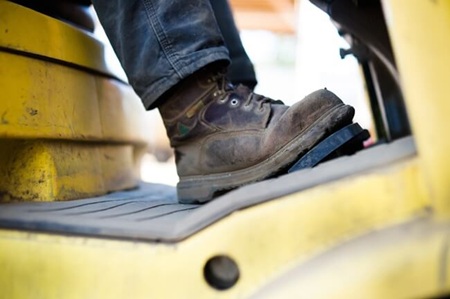
 The workday starts like any other. Maybe you’re loading up materials, moving equipment, or working in a tight space when something slips and falls—fast. A tool, container, or something you usually groan over having lift hits your boot, and for a split second, you brace for the pain, paperwork, and potential income hit of a workplace injury.
But the pain never comes. No trips to the hospital. No wondering how long you’ll be laid up, because your safety toe took the hit, not your foot.
Moments like that are why protective footwear exists. From construction sites to factory floors, safety toes prevent injuries that can take workers off the job for weeks or even months. And while every boot might look similar on the outside, the protection inside the toe cap can be very different.
Today’s options go far beyond the old-school steel models. There are aluminum, alloy, composite, metguard, and even nano safety toes, each built to meet specific safety standards, comfort needs, and job site demands. Knowing which type fits your work can save more than your toes; it can save you time, money, and a lot of discomfort.
Continue reading as we walk through the most common safety toe types, explain how they differ, and help you choose the one that’s right for the work you do every day.
Protective footwear has come a long way from its early days. In the 1930s and 1940s, factories and industrial sites were booming, but foot protection was mostly an afterthought. Workers faced daily hazards from dropped materials, rolling equipment, and heavy tools. Injuries happened—a lot.
That changed when manufacturers like Red Wing and Dr. Martens began experimenting with reinforced leather boots. The eventual result of this innovation was the first steel safety toe, a design built to absorb crushing force and protect against impact. These boots quickly became standard issue in heavy manufacturing and military supply lines during the post-war industrial surge.
By the 1970s, workplace safety regulations caught up with the realities of industrial work. Standards from organizations like ANSI and ASTM set clear requirements for impact and compression resistance, ensuring that every certified safety boot could stand up to real-world dangers.
As technology advanced, so did the options. Boot makers developed lighter, non-metal alternatives for workers who needed protection without the weight. Composites like fiberglass and Kevlar opened the door to modern composite safety toe designs, and nanotechnology later pushed the category even further with ultra-strong, lightweight materials.
Today’s safety toe boots balance protection with comfort, job-specific compliance, and performance features workers actually want.
Safety toe boots might look similar on the shelf, but what’s inside the toe cap makes a big difference in how they perform on the job. Each material offers its own mix of weight, durability, and comfort. Here’s how the main types compare:
The classic standard in foot protection. Steel toes have been around for nearly a century, known for their unmatched toughness and ability to take a serious hit without giving in.
Advantages:
Considerations:
Best For: Construction, heavy manufacturing, and industrial or mining work where maximum protection is required.
Aluminum toes offer the strength of metal in a lighter package. The cap walls are thinner but still meet strict ASTM safety standards. Alloy is a mixture of lighter metals, but has a lower cost to make.
Advantages:
Considerations:
Best For: Trades or logistics jobs where both protection and easy movement matter.
Made from non-metal materials such as fiberglass, carbon fiber, Kevlar, or reinforced plastic, composite toes are designed for modern versatility.
Advantages:
Considerations:
Best For: Electricians, airport workers, or anyone in cold-weather environments who needs insulation and protection without added weight.
The newest player in the field, nano toes use nanocarbon materials to combine strength and feather-light comfort. They’re reshaping how modern work boots are built.
Advantages:
Considerations:
Best For: Workers who want top-tier protection, long-day comfort, and dependable performance in all seasons. A favorite for warehouse workers.
Not every job or environment demands the same kind of protection. The right pair of boots depends on how you work, where you work, and what conditions you face every day.
Here are a few key things to keep in mind before you buy:
Steel toe boots are usually the most affordable option, while nano models sit at the higher end of the price range. That doesn’t mean “expensive equals better.” It’s about matching your boot to your work.
If you’re on concrete all day, the lighter feel and insulation of a nano toe might justify the cost. But for short shifts or tough industrial work, a reliable steel pair can last for years and handle anything you throw at it.
Metal toes — steel and aluminum — can transfer heat and cold quickly, which isn’t ideal if you’re working outdoors in extreme weather. Composite and nano materials, on the other hand, act as natural insulators.
Electricians, utility crews, and anyone working outside in winter often prefer them because they keep toes warmer and prevent that “frozen boot” feeling.
When your boots feel heavy, your whole shift feels heavier. Steel is the heaviest material, while nano is the lightest. The difference may not sound big, but after ten hours on your feet, it adds up.
Look for boots with cushioned insoles, breathable liners, and roomy toe boxes that allow natural movement. The right fit isn’t just about comfort; it can also reduce fatigue and prevent long-term strain.
Durability
Steel remains the gold standard for pure strength and resistance to mechanical stress. It holds up well in rough conditions, from rebar to falling equipment. Composite and nano toes bring a different kind of durability: they don’t rust, conduct electricity, or weaken in extreme temperatures.
If you work in wet, corrosive, or high-heat environments, those properties can make a big difference over time.
Composite and nano toes are both non-conductive, making them ideal for electricians or anyone around live wires. Some models also include ESD (Electrostatic Dissipative) protection, which safely channels static electricity away from sensitive components — especially important in electronics manufacturing, labs, or tech facilities.
If your job takes you through security checkpoints — like airports, shipping hubs, or correctional facilities — keep in mind that steel and aluminum toes will trigger detectors. Composite and nano toes won’t, offering the same protection without the hassle of constant screening delays.
Modern safety boots are built with workers’ comfort in mind. Brands like KEEN Utility and Timberland Pro offer asymmetrical toe designs that match the natural contour shape of your left and right feet, giving each toe more room to move. The benefits are more stability, comfort, and a more natural fit.
Some, like Red Wing, feature wider toe boxes for better circulation and balance. Inside the boot, customizable insoles and support systems make a big difference. For a perfect fit, in-store Aetrex foot scanning can measure pressure points and arch type to match you with the right boot every time.
If you’ve ever looked inside a work boot and seen a jumble of letters and numbers—like ASTM F2413-18 I/C EH—you’re looking at proof that your boots meet nationally recognized safety standards. Understanding what those codes mean helps you know exactly how much protection you’re getting.
ASTM stands for the American Society for Testing and Materials, the group that sets performance standards for protective footwear.
The F2413 standard measures how well a boot can protect against:
Some boots also include additional ratings, such as:
Every letter and number tells you what your boot can handle, so it’s worth taking a quick look before you buy.
You’ll usually find the ASTM label printed inside the tongue of the boot or stamped on the safety toe itself. If it’s missing or worn off, it’s best to double-check before assuming the boot still meets standards, especially if you’re working in a regulated environment.
Certified boots aren’t just about compliance; they’re about trust. They’ve been tested to protect against real hazards, not just advertised to.
At BareBones WorkWear®, every pair of safety toe boots we carry—whether steel, aluminum, composite, or nano—is ASTM-certified from brands known for quality and consistency.
When you see that F2413 label, you know your boots aren’t just tough; they’re proven tough.
Every trade comes with its own risks. A warehouse worker’s needs aren’t the same as an electrician’s, and a construction foreman faces different hazards than someone working in manufacturing or logistics.
Choosing the right safety toe isn’t just about comfort; it’s about matching your protection to the demands of your job. Below is a quick guide to help you decide which type of boot fits your work best.
| Industry or Job Type | Recommended Toe Type | Why It Works | Potential Brands |
| Construction / Heavy Trades | Steel or Aluminum | Built for impact resistance and compression strength; reliable in tough environments where falling objects or heavy equipment are common. | Timberland PRO, KEEN Utility, Thorogood, Carolina, Danner |
| Electrical / Utilities | Composite or Nano | Non-conductive and lightweight for protection around live wires or electrical panels; stays comfortable during long shifts. | Carolina, Ariat, KEEN Utility, Thorogood |
| Manufacturing / Warehouse | Aluminum or Composite | Strikes a balance between durability and flexibility; light enough for constant movement while still strong enough for machinery hazards. Athletic Styles | Wolverine, Red Wing, Volcom, KEEN Utility, Reebok, Rocky, DC Crew |
| Airport / Security Work | Composite or Nano | Passes through metal detectors without alarms; comfortable for long walking distances and frequent security checks. | KEEN Utility, 5.11, Reebok, Volcom, DC Crew |
| Outdoor / Extreme Weather / Ag | Composite or Nano | Insulates against heat and cold while staying lightweight; ideal for unpredictable weather and year-round wear. | Danner, Irish Setter, Timberland PRO, KEEN Utility, Georgia |
| Mining / Industrial / Heavy Equipment | Steel | Maximum durability and crush protection for harsh, high-impact environments. | Thorogood, Carhartt, Danner, Red Wing, Timberland Pro, KEEN Utility, Carolina, Irish Setter, Georgia, Muck, Redback, WorkZone, Wolverine |
No matter your trade, the right boot should protect, fit well, and help you work efficiently.
No matter what kind of work you do, the best safety toe boots are the ones that protect you without slowing you down. That’s why BareBones WorkWear® carries a full range of options—from traditional steel to cutting-edge nano—to help every worker find the right balance of protection, comfort, and performance.
When you stop by one of our stores, our team can walk you through the features that matter most for your job, explain how each safety rating works, and even help you find your ideal fit using our Aetrex foot scanning system. It measures pressure points, arch type, and foot shape to match you with boots that keep you safe and comfortable from the first hour of your shift to the last.
Every pair we sell meets ASTM standards and comes from trusted brands that understand what it means to work hard: Thorogood, Ariat, Timberland PRO, KEEN Utility, Carhartt, Danner, Carolina, Wolverine, Volcom, and more. Whether you need lightweight flexibility, electrical protection, or all-day durability, we’ve got a pair built for your line of work.
Visit any of our 10 Northern California locations to explore our full lineup of safety toe boots and get expert advice from people who know the work.